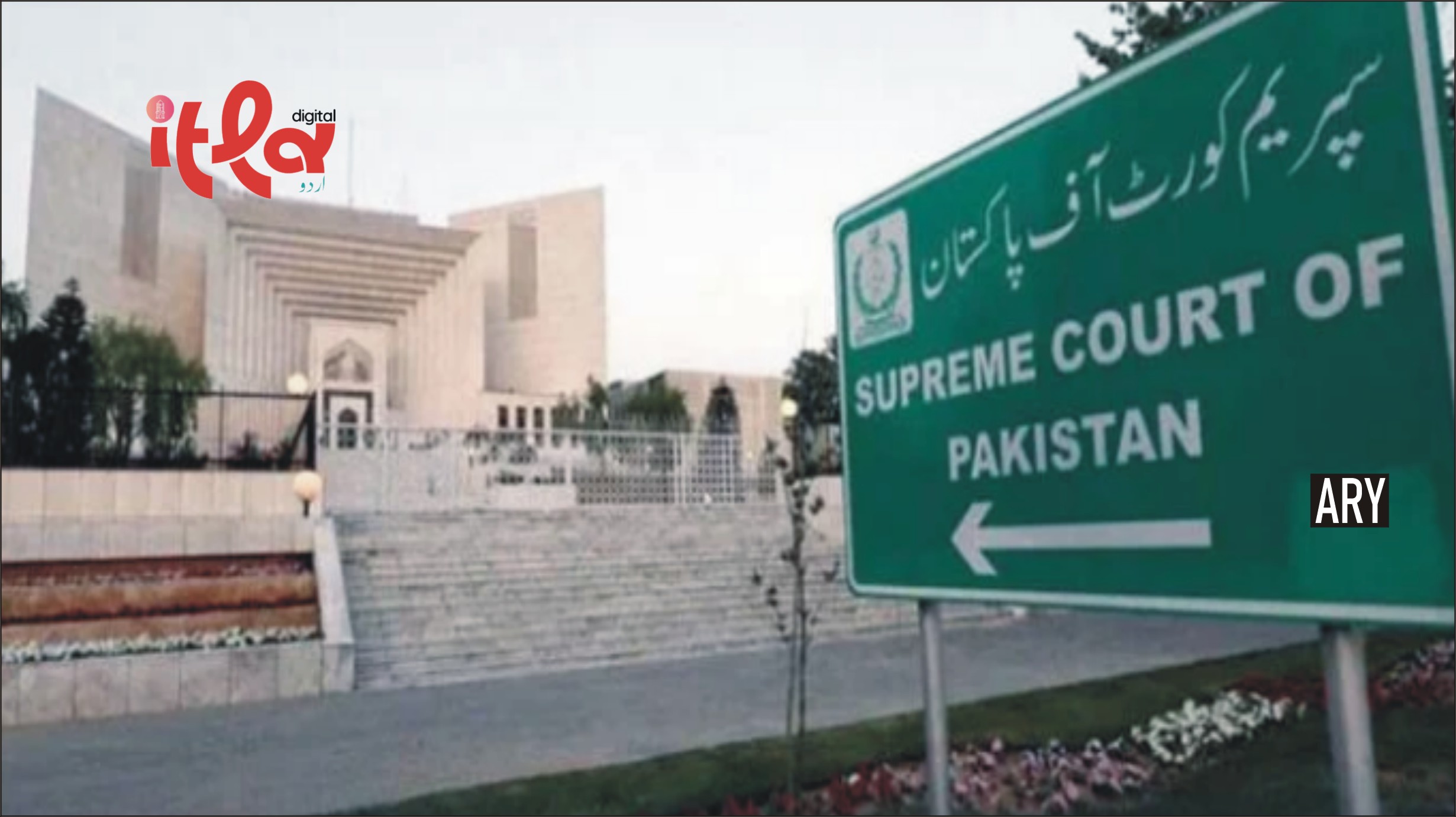
(Digital Itla) – Supreme Court Justice Shahid Bilal Hassan has delivered a historic verdict against depriving women of their inheritance rights. Justice Shahid Bilal Hassan annulled past decisions that deprived two sisters and their mother of property for 71 years, ordering that they be given their rightful share of the inherited estate.
Justice Shahid Bilal Hassan maintained that inheritance is not a favor from men but a Shariah and legal right. He ruled that fake gifts (Hiba), fraud, and family pressure to deprive women will not be accepted under any circumstances. Following the father's death in 1955, the two brothers had transferred the inherited property to their names, using an alleged verbal gift as a pretext to deprive their mother and sisters of the estate.
A two-member bench of the Supreme Court, headed by Justice Shahid Bilal Hassan, issued the 14-page verdict on an appeal by Noor Muhammad. The court clarified that inheritance is not the favor or discretion of the male members of a family but a Shariah and legal right of every heir, which transfers automatically upon the death of the deceased owner.
The verdict declared that fake gifts, fraudulent transfers, deception, family pressure, or customs aimed at depriving women of inheritance cannot be tolerated at all. It is mandatory for courts to scrutinize every transaction and agreement that deprives women of inheritance with utmost care to ensure no woman's fundamental right is usurped.
Justice Shahid Bilal Hassan wrote in the decision that women's inheritance shares are mandatory rights, not symbolic or optional. Women cannot be deprived of inheritance in the name of family honor, tradition, or social pressure.
The judgment stated that the State, courts, and revenue authorities are responsible for protecting women's inheritance rights, and women must receive their rights practically, not just on paper. The court further ruled that the inclination of the law should always favor protecting women's inheritance rights rather than eliminating them.
According to the judicial decision, the record proved that after the father's passing in 1955, the two brothers transferred the inherited property to themselves and deprived the mother and sisters based on a verbal gift. The petitioners argued that this verbal gift was approved through forgery. The Supreme Court ruled that the burden of proving a verbal gift lies on the party benefiting from it.
The court noted that the trial court, instead of properly assessing the burden of proof, accepted the gift itself as proof, which was completely contrary to the law. According to the apex court, the decisions of the trial court, appellate court, and high court were against both facts and the law.
The verdict added that although the High Court took the position that the verbal gift had not been challenged for several decades, the responsibility to prove the gift remained with the beneficiaries despite the delay. The record also showed that for several years after the agreement, the mother and sisters continued to receive a share of the land's income, proving they were kept unaware of the alleged gift.
Rejecting the ground of delay in filing the claim, the Supreme Court accepted the petitioners' appeal, declared all subordinate court decisions null and void, and directed the relevant revenue authorities to correct the inheritance records in accordance with the law.
Categories
Latest Posts