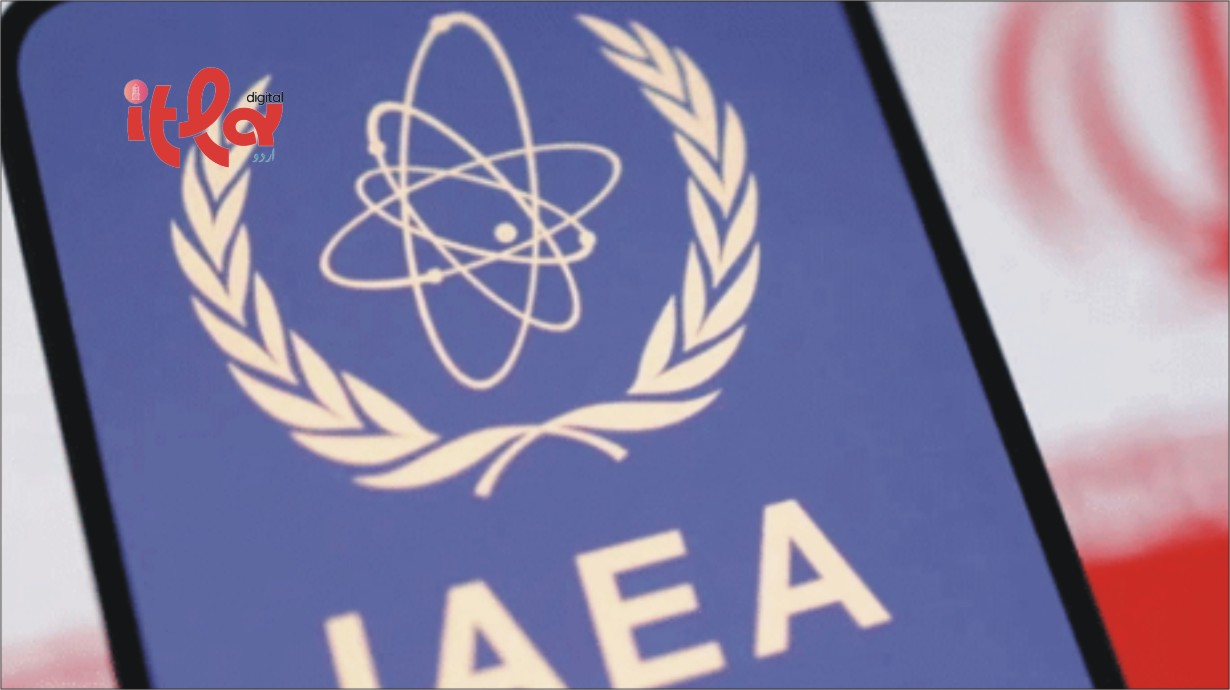
(Digital Itla) The US-Iran Memorandum of Understanding includes inspecting nuclear facilities to assess uranium enrichment, says Rafael Grossi. The head of the UN nuclear watchdog, the International Atomic Energy Agency (IAEA), Rafael Grossi, stated that under the Iran-US peace agreement, our inspectors will soon visit Iran to examine its nuclear facilities. The IAEA chief expressed these views while talking to journalists in Japan.
IAEA Director General Rafael Grossi said that the inspection process in Iran will definitely take place, and the agency is finalizing the dates, procedures, and locations. He further explained that the US-Iran MoU clearly states that the process of converting Iran's highly enriched uranium into low-enriched uranium will be carried out under IAEA supervision.
On the other hand, Iran's Deputy Foreign Minister, Kazem Gharibabadi, stated that the issue of access to nuclear facilities affected by US attacks and the nuclear material present there will only be decided within the framework of a final agreement. He added in his statement on social media that any decision will be made only when the US practically takes steps to lift all sanctions; ground realities cannot be changed merely by giving statements in the media.
Earlier, US Vice President JD Vance, after meeting Iranian negotiators in Switzerland, stated that Iran had agreed to allow IAEA inspectors back into the country. However, the Iranian Foreign Ministry spokesperson denied this claim, saying no detailed discussions had taken place and Iran had not agreed to allow inspectors access to sensitive nuclear facilities targeted in US attacks. Later, US President Donald Trump also dismissed Iran's statements, claiming that Iran had fully agreed to international inspections.
Commenting on these conflicting statements between the US and Iran, IAEA Director Rafael Grossi said that while political statements have their place, the real significance lies in the Memorandum of Understanding signed by the presidents of both countries. He added that the document explicitly states that nuclear materials, facilities, and related activities will be monitored by the IAEA, which is the only way the process can be carried out effectively. Grossi also expressed hope that the IAEA inspectors would receive full cooperation from Iran, whether the process begins in a few days or a week.
According to the latest IAEA report, the agency's inspectors recently visited Iran's Bushehr nuclear power plant, but they have not yet been granted access to the sensitive nuclear facilities targeted in US attacks last year. The agency stated that under current circumstances, it is impossible to determine the exact quantity, nature, and location of Iran's enriched uranium stockpiles, or whether Iran has completely stopped uranium enrichment. According to the IAEA, before the war, Iran possessed approximately 440 kilograms of 60% enriched uranium, which, if further enriched, could theoretically produce 10 nuclear weapons. However, Iran continuously reiterates its stance that its nuclear program is entirely for peaceful purposes and it has no intention of building nuclear weapons.
Categories
Latest Posts